
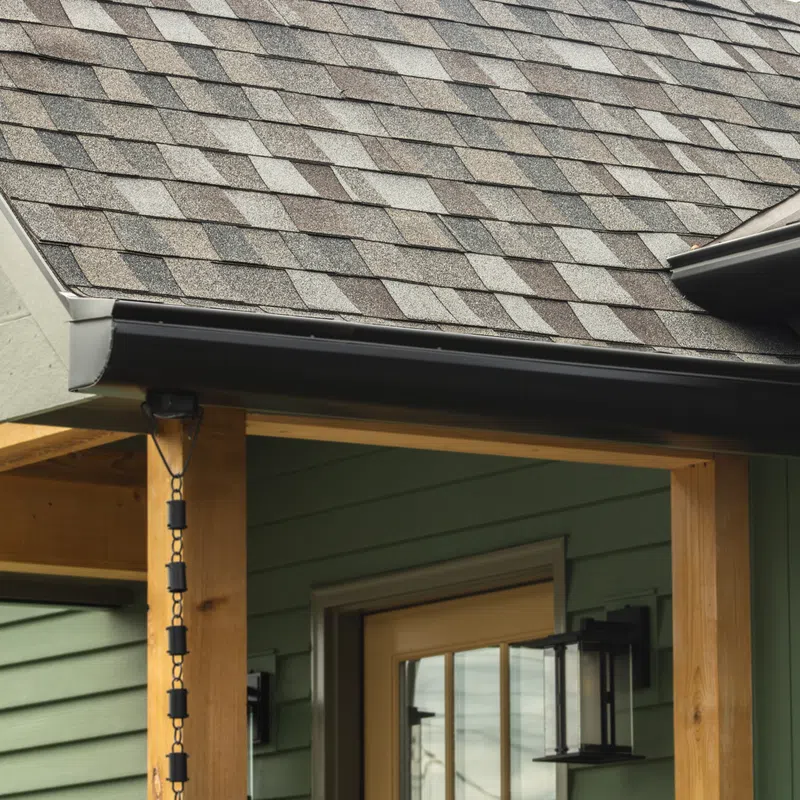
After a roofing project, Nelson Exteriors recommends keeping a small amount of matching material when appropriate. Those extra shingles can be useful later, but only if they remain in good condition.
Why Leftover Asphalt Shingles Are Worth Keeping
Saving extra shingles from your installation gives you matching material to work with if a small section of the roof needs attention later.
Roofing colors and product lines can change over time. Even when the same product is still available, newly manufactured shingles may not look exactly like shingles that have spent years exposed to Georgia sun and weather.
Keeping a few leftovers can be practical for:
- Replacing an individual damaged shingle
- Addressing localized storm or impact damage
- Matching the original product and color more closely
- Giving a roofing professional an original material reference
Before storing them, record the manufacturer, product line, color, and installation date. Keep any available product labels or packaging with the shingles.
The Best Conditions for Storing Asphalt Shingles
A cool, dry, covered, and ventilated location is generally the safest choice.
Manufacturer instructions should always take priority because storage requirements can vary by product. GAF recommends keeping shingles in a cool, dry place, while Owens Corning specifies storing bundles flat in a covered, ventilated area at temperatures no higher than 110°F.
For homeowners in North Metro Atlanta, consider these factors before choosing a garage, shed, basement, or other storage area:
- Heat: Avoid locations that become excessively hot during Georgia summers.
- Moisture: Keep roofing materials away from leaks, standing water, and damp floors.
- Sunlight: Do not leave bundles where they receive prolonged direct sunlight.
- Ventilation: Choose an area where heat and humidity are not constantly trapped.
- Weight: Make sure the shelf, platform, or floor can safely support the material.
If you are planning a new roof or need help evaluating existing materials, Nelson Exteriors provides roofing services for homeowners throughout North Metro Atlanta.
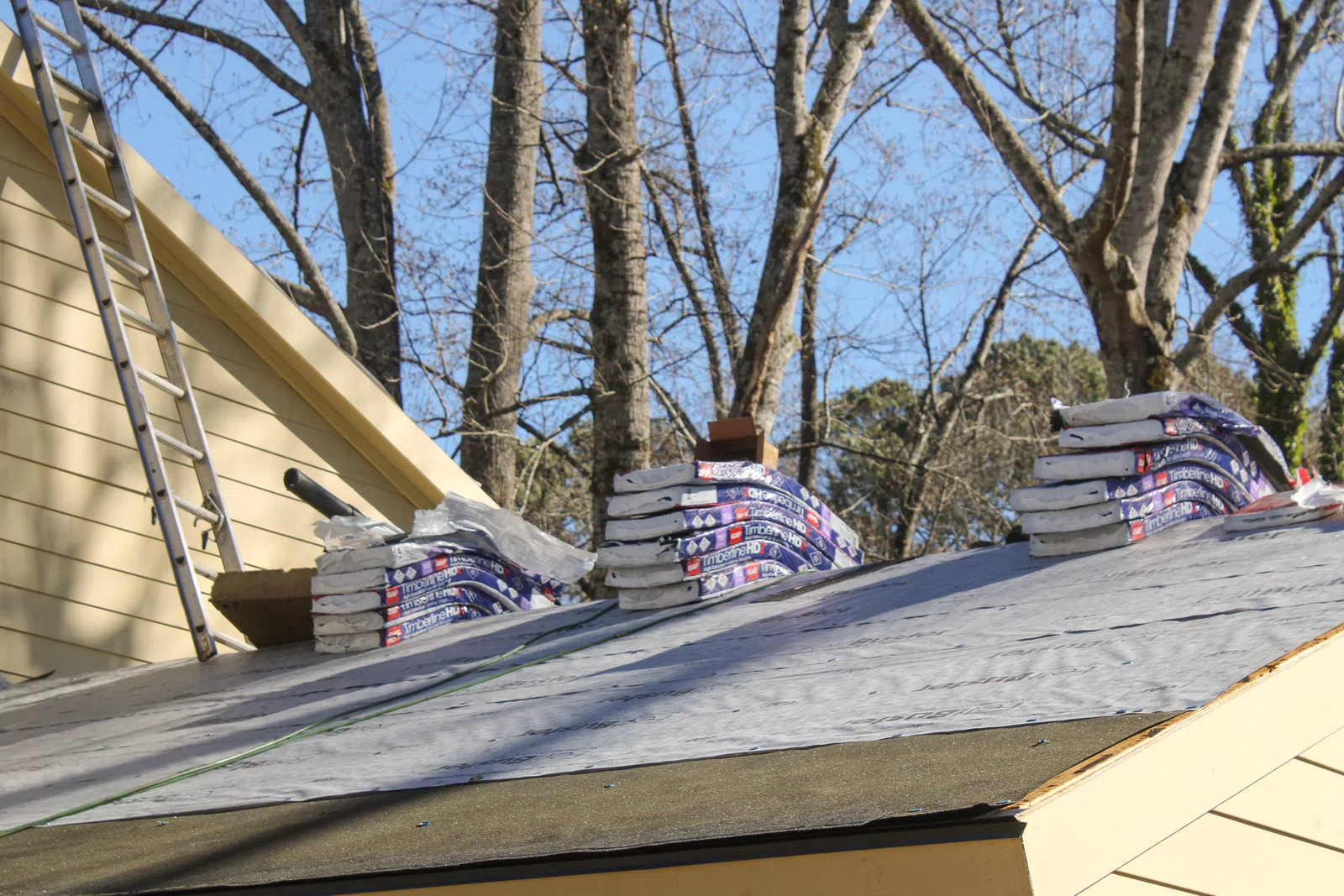
Should Asphalt Shingles Be Stored Flat?
Yes. Keep shingle bundles lying flat on a level surface. Do not lean them vertically against a wall or drape them across an uneven object.
Bending and uneven pressure can distort shingles, making them harder to use properly later. Improper storage can also contribute to sticking, staining, or other material damage.
Can Shingles Be Stored in a Garage?
A garage can work well if it stays dry, reasonably cool, and ventilated. Avoid placing the bundles near doors where wind-driven rain can reach them or in areas that become extremely hot.
Do not place heavy household items on top of the bundles, and keep the shingles somewhere they will not be bent, stepped on, or hit by vehicles or equipment.
Common Storage Mistakes to Avoid
Improper storage can leave your spare shingles unusable when you eventually need them.
Avoid:
- Standing bundles upright against a wall
- Leaving shingles exposed to direct sunlight
- Storing them where water can collect
- Placing heavy objects on top of the bundles
- Bending shingles to fit into a smaller space
- Leaving product information or labels unprotected
- Keeping damaged or deteriorated material without having it evaluated
Watch for signs such as warping, cracking, staining, excessive granule loss, moisture damage, or shingles that have become stuck together.
Do not assume a damaged leftover shingle is suitable for a repair simply because it matches your roof.
Homeowners can also learn more about common roof types in Georgia when comparing roofing materials and planning future exterior projects.
Moving and Measuring Leftover Shingles Safely
Shingle bundles can be surprisingly heavy. Avoid carrying more than you can comfortably control, and use help or appropriate equipment when relocating full bundles.
Before choosing a storage spot:
- Count the bundles and loose shingles you plan to keep.
- Measure their footprint while they are lying flat.
- Leave enough room to access them without bending or dragging them.
- Confirm that the storage surface can safely carry the weight.
- Label the material so someone in the household does not accidentally discard or move it.
Keeping a simple inventory with your home maintenance records can also make the material easier to identify years later.
Disposing of Unwanted Asphalt Shingles in Georgia
If you decide not to keep your leftover shingles, do not dump or burn them.
Georgia's solid-waste rules state that roofing shingles containing asphalt may be disposed of only in construction-and-demolition or municipal solid-waste landfills. Local collection and facility requirements can vary, so homeowners should confirm acceptance with their local waste provider or permitted facility before transporting the material.If the leftovers are still usable, it may make sense to keep a reasonable amount for future repairs rather than automatically discarding everything.
Planning a Roofing Project?
Nelson Exteriors is a family-owned and operated, second-generation exterior remodeling company that has served homeowners since 1977. Experienced project managers stay involved throughout roofing projects, with regular communication and ongoing quality control from installation through completion.
Learn more about our story, or contact us online to request a free estimate for your North Metro Atlanta roofing project.
FAQs About Storing Asphalt Shingles
How long can leftover asphalt shingles be stored?
There is no single storage period that applies to every product. Condition matters more than age alone. Keep shingles protected and inspect them for warping, cracking, sticking, moisture damage, or other deterioration before using them.
Should I cover leftover asphalt shingles?
Yes, they should be protected from water, dirt, sunlight, and physical damage. However, the covering should not trap excessive heat or moisture. Follow the manufacturer's storage guidance for your specific shingles.
How many leftover shingles should I keep?
There is no standard amount that works for every roof. The useful quantity depends on your roofing product, available storage space, and potential repair needs. Ask your roofing contractor what makes sense to retain after installation.
Can damaged leftover shingles still be used?
Not always. Shingles that are warped, cracked, moisture-damaged, or otherwise deteriorated may not be suitable for installation. Have questionable material evaluated before using it for a repair.